

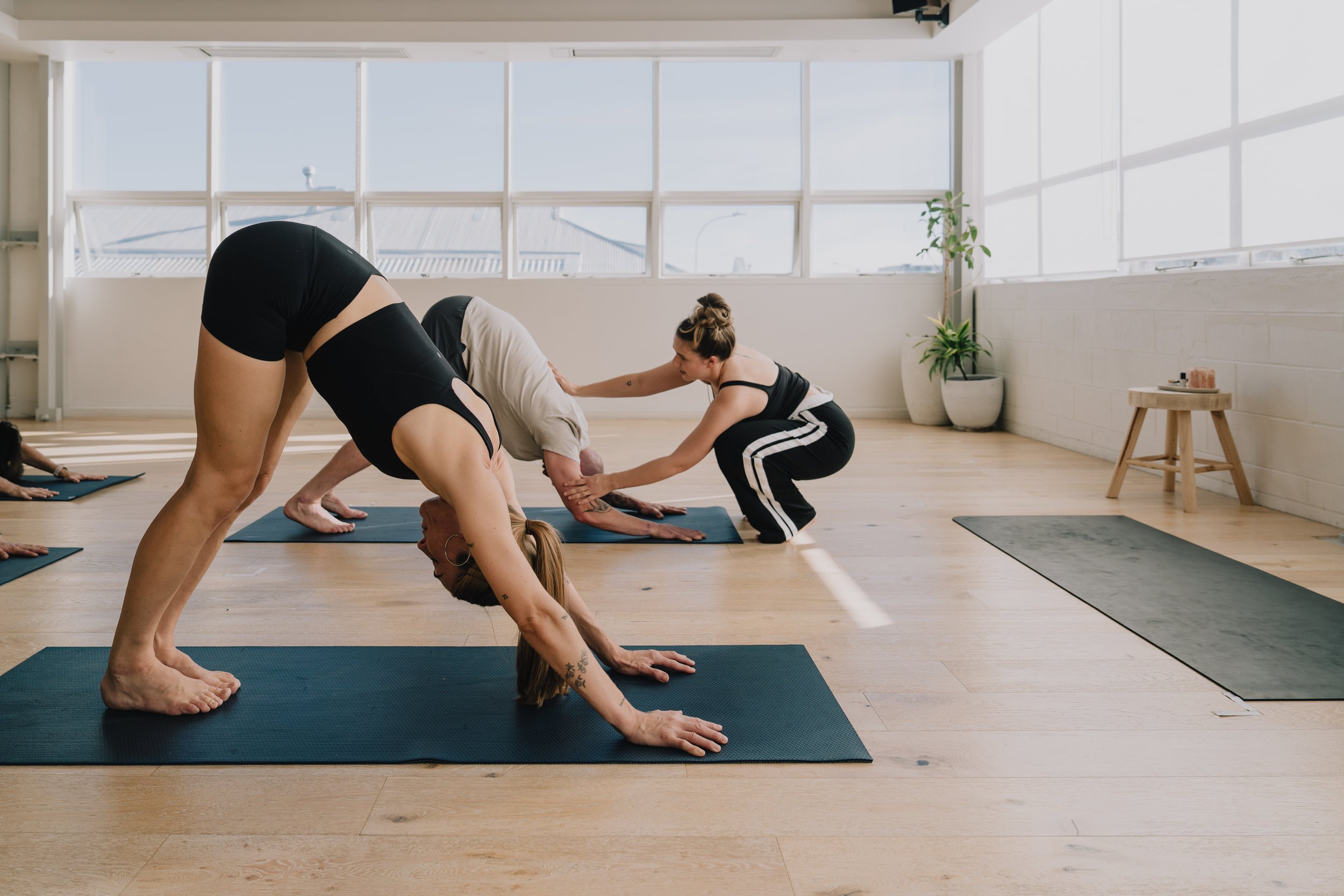
There’s been a pretty big shift in the way we talk about hands-on adjustments in yoga.
And honestly, I think that’s a really good thing.
For a long time, hands-on adjustments were almost synonymous with being a “good” yoga teacher. We were taught a series of adjustments for different postures — where to place our hands, how to guide someone deeper, how to change the shape we were seeing in front of us.
But as our understanding of anatomy, fascia, the nervous system, consent and individual bodies has evolved, so has the conversation around touch.
We know now that there isn't one ideal way for every body to perform an asana.
We know that deeper doesn't necessarily mean better.
We know that what looks like a beautiful alignment from the outside doesn't always tell us what's happening on the inside.
And we know that touch is incredibly personal.
So it begs the question:
Do hands-on adjustments still have a place in modern yoga?
At Kula, we believe they do.
But perhaps we need to change the way we think about them.
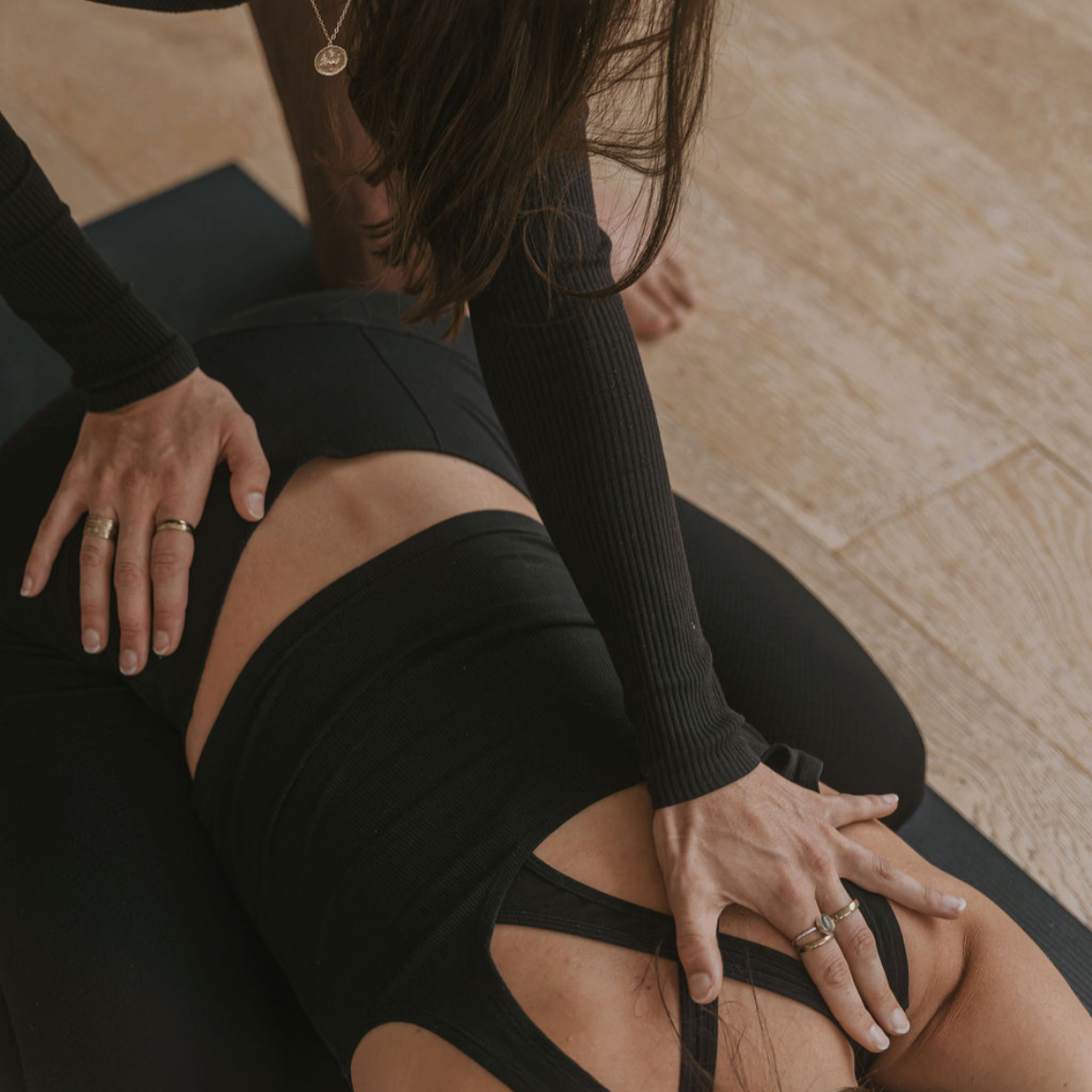
It's Not About "Fixing" Someone
One of the things I find most interesting about hands-on assisting is how much it reflects our underlying beliefs about the body.
If we believe there is one “correct” version of a yoga pose, then it makes sense that our role as teachers becomes trying to get our students there.
We see a knee somewhere we don't expect it to be.
A hip that isn't square.
A spine that doesn't look like the picture.
And our instinct is to adjust.
But what if there isn't actually anything wrong?
What if that student's anatomy simply doesn't resemble ours?
What if their femur sits differently in their hip socket?
What if their proportions change the way they experience the posture?
What if their nervous system is asking for something completely different from what the visual shape suggests?
Functional anatomy has really shifted the way I think about teaching.
Rather than asking, “How do I make this body look like the pose?”, I'm much more interested in asking:
“What is this person experiencing, and what might support them here?”
That is a much more curious place to teach from.
Touch Can Be An Invitation, Not An Instruction
I think this is where hands-on assisting can become really beautiful.
Because touch doesn't have to mean “I'm going to move you.”
It can mean:
“Can you feel this?”
“What happens if you explore this direction?”
“Can you sense where you're grounded?”
“What happens when you soften here?”
Sometimes a simple point of contact can create an enormous shift in proprioception.
A student may suddenly become aware of an area of their body that they weren't consciously sensing before.
They might feel the relationship between their pelvis and feet.
The movement of their shoulder blade.
The support of the ground beneath them.
The expansion of their breath.
Or simply a sense of being more present inside their body.
And that, to me, is far more interesting than making someone's pose look “better.”
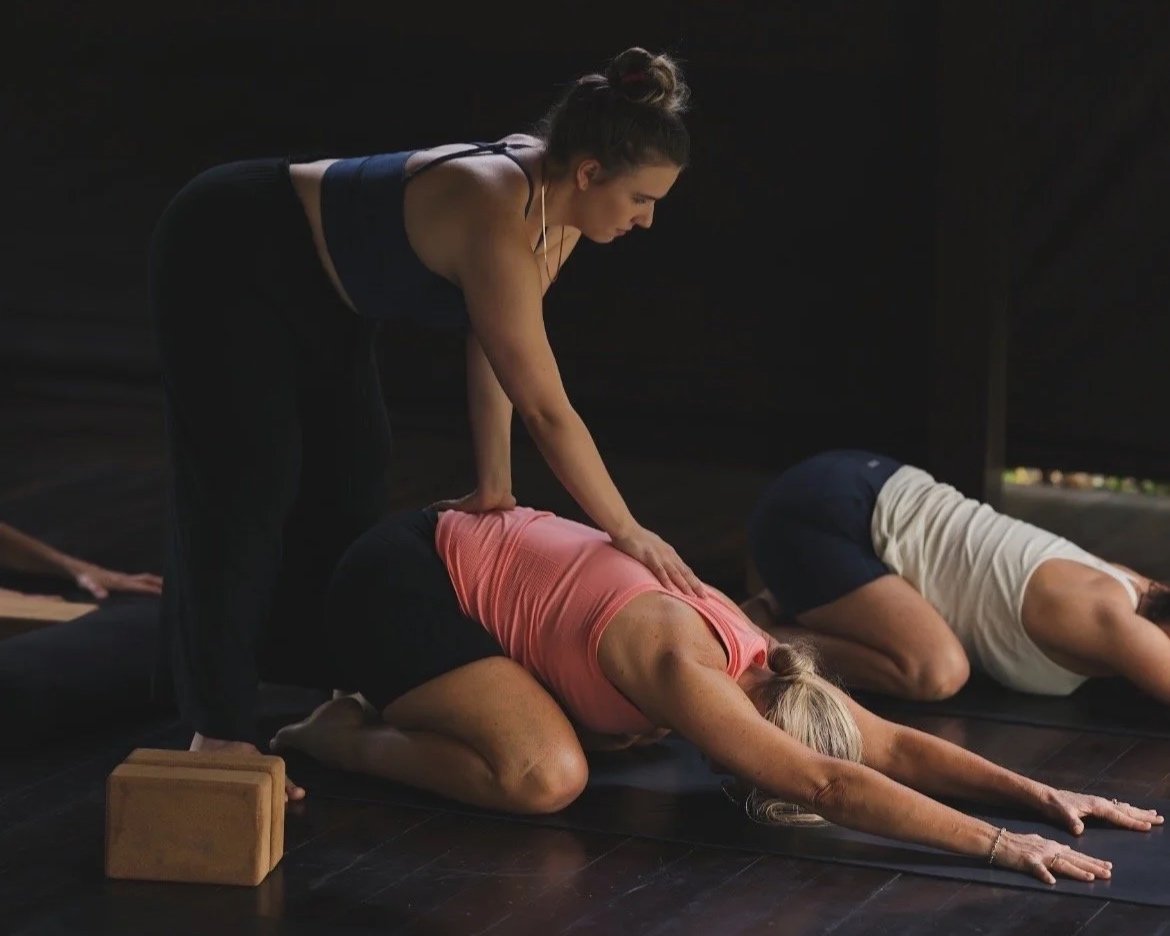
Your Hands Are Communicating
As teachers, we spend a lot of time thinking about our words.
We think about our cues.
Our sequencing.
Our demonstrations.
Our tone of voice.
But touch is also communication.
And like any form of communication, it can be clear or confusing, supportive or intrusive, appropriate or inappropriate.
That's why I don't think learning hands-on adjustments is simply about memorising where to put your hands.
It's about learning how to listen with your hands.
That requires a different kind of awareness.
You have to be able to notice what is happening in the body in front of you.
You need enough anatomical understanding to know what you're actually working with.
You need to understand that resistance isn't necessarily something to push through.
You need to recognise when a student is receptive to touch — and when they aren't.
And you need to become comfortable with the idea that sometimes the best adjustment is no adjustment at all.
The Importance of Individual Anatomy
This is one of the biggest reasons I still believe hands-on assisting matters.
When we understand functional anatomy, we start to see just how beautifully individual human bodies are.
Our bones aren't all shaped the same.
Our joints have different structures.
Our proportions vary.
Our ranges of motion vary.
Our tissues respond differently.
Our previous experiences with movement are different.
And all of that influences the way we experience an asana.
So rather than having a collection of “perfect” adjustments that we apply to every student, I want teachers to develop the ability to observe, feel, interpret and respond.
That takes practice.
It also takes humility.
Because the more we understand the body, the more we realise how little there is to “fix.”
What About Fascia?
Our understanding of fascia has also added another really interesting layer to the conversation around touch.
The body isn't simply a collection of isolated muscles that we can lengthen and manipulate independently.
We're working with an interconnected system of tissues, sensory receptors, joints, muscles and nervous system responses.
Touch can provide sensory information.
It can change our awareness of an area.
It can influence how we perceive a movement.
It can help bring attention into the body.
And this is where I think hands-on work becomes much more nuanced than simply “assisting a stretch.”
We're not just moving someone into a shape.
We're interacting with a living, sensing system.
And that deserves a lot of respect.
The Nervous System Matters Too
Something else we can't ignore is that touch is not neutral.
Our bodies are constantly receiving information from the environment.
Pressure, temperature, movement, proximity and touch all contribute to our sensory experience.
Which means the way we approach a student matters.
The speed of our touch matters.
The amount of pressure matters.
Where we place our hands matters.
And whether someone actually wants to be touched matters enormously.
A technically “correct” adjustment can still be completely inappropriate if the student doesn't feel safe, comfortable or willing to receive it.
This is why consent isn't a little disclaimer we add before we start adjusting.
It is part of the practice.
Consent Changes Everything
I think we're finally moving away from the idea that students should simply accept whatever a teacher offers them.
Touch should never be assumed.
Students should feel empowered to say no.
And teachers should be completely comfortable hearing no without taking it personally.
For me, good hands-on assisting starts long before the hands make contact.
It starts with communication.
It starts with trust.
It starts with creating an environment where a student knows that their body belongs to them.
And when someone does choose to receive touch, that becomes something we approach with care rather than entitlement.
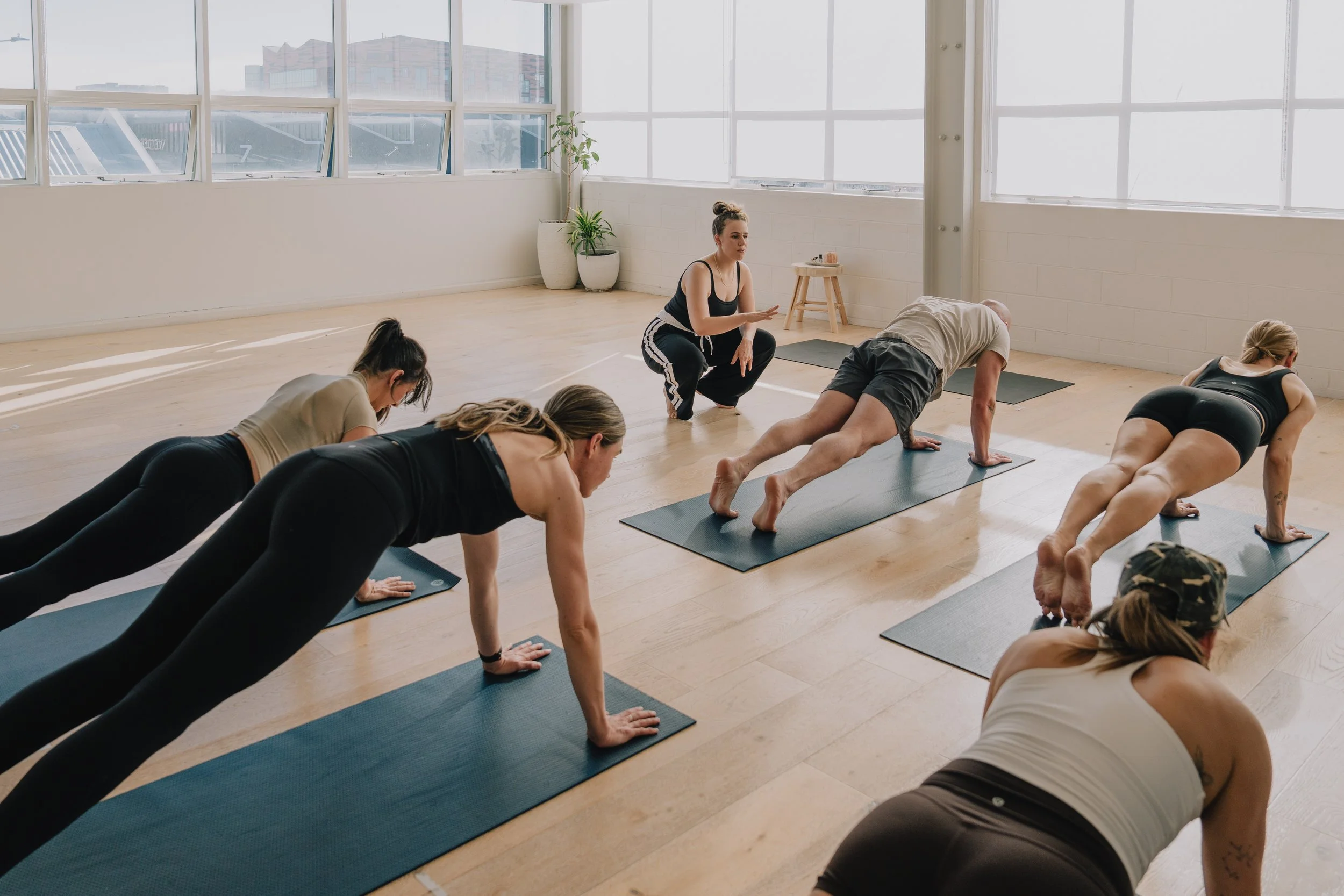
So What Makes a Good Adjustment?
For me, a good adjustment isn't necessarily the one that creates the biggest physical change.
It might be incredibly subtle.
It might help someone feel their breath.
It might offer a little more support.
It might bring awareness to an area they haven't been sensing.
It might give them information that helps them explore the posture independently.
And sometimes, it might simply help someone feel held.
A good adjustment is:
Intentional.
You know why you're offering it.
Responsive.
You're responding to the person rather than following a formula.
Anatomically informed.
You understand that every body is different.
Non-forceful.
You're not trying to push someone into a range of motion that isn't theirs.
Consensual.
The student has agency and choice.
Useful.
The touch adds something meaningful to their experience.
And perhaps most importantly, it leaves the student with more information about their own body, rather than making them dependent on you to create the experience for them.
We Don't Need to Throw Touch Away
I sometimes think the conversation around adjustments can become a little polarised.
Either you're someone who loves adjustments and thinks every student needs to be physically manipulated into alignment…
or you're someone who thinks all touch in yoga is outdated and shouldn't happen at all.
I don't think it has to be either.
I think there is a middle ground.
A really beautiful one.
We can acknowledge the problems with the way adjustments have historically been taught while still recognising that touch can be an incredibly valuable teaching tool.
We can become more informed.
More consent-led.
More anatomically curious.
More sensitive to nervous system responses.
And more willing to ask ourselves:
“Is my touch actually serving this student?”
Our 12hr Hands-On Adjustments Training
This is exactly why we're bringing our 12hr Hands-On Adjustments Training to Kula this November.
This isn't a day of memorising a list of adjustments.
It's an opportunity to explore the why behind touch.
We'll look at how anatomy, fascia, proprioception, nervous system awareness and communication can all inform the way we approach hands-on assisting.
We'll explore how to read the person in front of you, how to use touch as a form of communication, and how to develop greater confidence in knowing when to assist — and when to step back.
We'll spend a lot of time actually practising.
Because you can read about touch all day, but ultimately, it's something you learn through experience.
We'll explore:
Functional anatomy and individual variation
The role of proprioception and sensory awareness
Fascia and the interconnected body
Touch and nervous system responses
Consent, boundaries and communication
When touch is appropriate — and when it isn't
How to approach different bodies and movement patterns
Using touch to create awareness rather than force range
Developing sensitivity and confidence in your hands
Practical hands-on assisting across a range of asana
Finding your own approach and language around touch
There will be space to ask questions, experiment, practise and learn from one another.
The Art of Assisting Isn't About Moving Someone
The older I get as a teacher, the less interested I am in making a pose look a certain way.
I'm much more interested in what someone feels.
What they understand.
What they notice.
What becomes available to them.
And whether they leave the practice feeling more connected to their own body.
That's what I want hands-on assisting to support.
Not forcing.
Not fixing.
Not performing.
Listening.
And perhaps that's why I think hands-on adjustments still matter.
Not because we need to keep doing things the way they've always been done.
But because when we approach touch with more knowledge, more humility and more care, it can become something really powerful.
A conversation between teacher, student and body.
And I think that's worth learning how to do well.
12hr Hands-On Adjustments Training
November 2026 | Kula Studio, Christchurch
For yoga teachers and practitioners who want to explore touch through the lens of functional anatomy, fascia, proprioception, nervous system awareness and embodied teaching.
Come learn the art of assisting — not the art of adjusting people. Want more info - click here.